The story of success. Bill Gates, the Beatles, Oppenheimer.
Do you agree with Malcolm Gladwell? Were you inspired to make your own success story or disheartened by his explanation of how to get there?
I was inspired and relieved; inspired to be grateful for the opportunities and family contributions leading to my successes, opportunities that I never created myself. Thank you! I felt relief to think some failures are also missed opportunities or specialized upbringing. Now I must go out into the world and create my own opportunities for success!
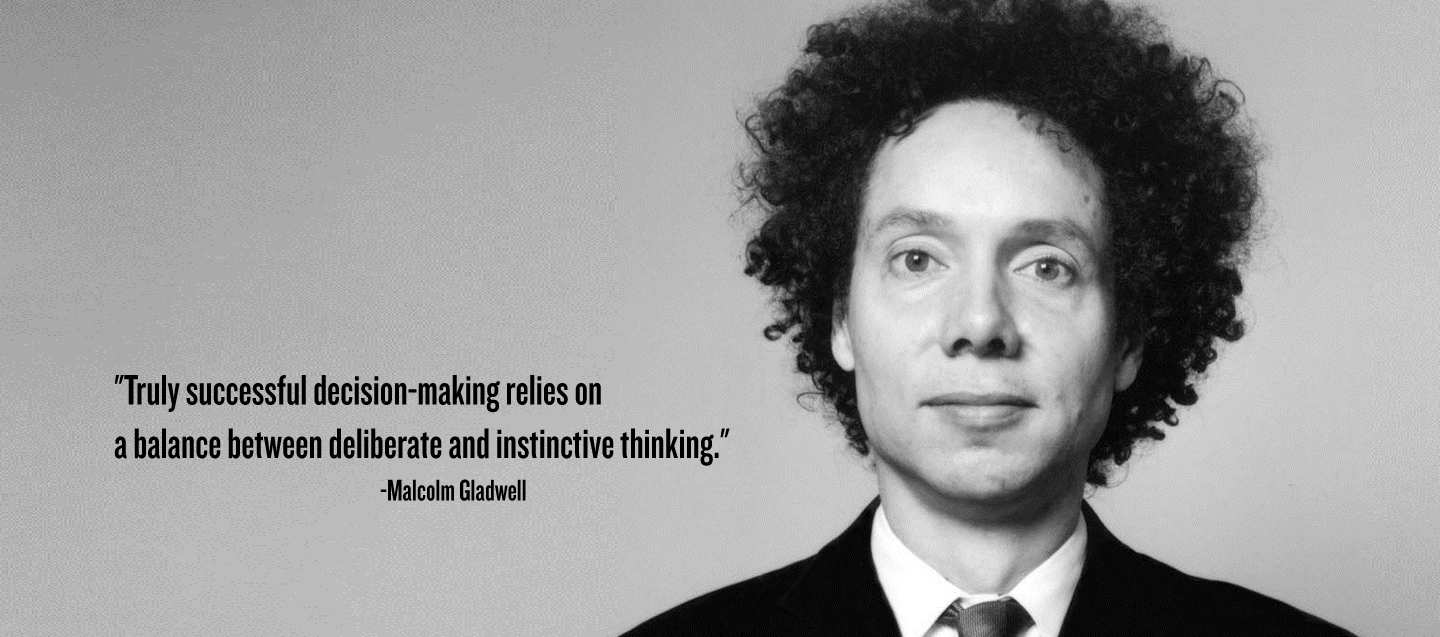
Q and A with Malcolm (source)
1. What is an “Outlier”?
“Outlier” is a scientific term to describe things or phenomena that lie outside normal experience. In the summer, in Paris, we expect most days to be somewhere between warm and very hot. But imagine if you had a day in the middle of August where the temperature fell below freezing. That day would be outlier. And while we have a very good understanding of why summer days in Paris are warm or hot, we know a good deal less about why a summer day in Paris might be freezing cold. In this book I’m interested in people who are outliers—in men and women who, for one reason or another, are so accomplished and so extraordinary and so outside of ordinary experience that they are as puzzling to the rest of us as a cold day in August.
2. Why did you write Outliers?
I write books when I find myself returning again and again, in my mind, to the same themes. I wrote The Tipping Point because I was fascinated by the sudden drop in crime in New York City—and that fascination grew to an interest in the whole idea of epidemics and epidemic processes. I wrote Blink because I began to get obsessed, in the same way, with the way that all of us seem to make up our minds about other people in an instant—without really doing any real thinking. In the case of Outliers, the book grew out a frustration I found myself having with the way we explain the careers of really successful people. You know how you hear someone say of Bill Gates or some rock star or some other outlier—”they’re really smart” or “they’re really ambitious?” Well, I know lots of people who are really smart and really ambitious, and they aren’t worth 60 billion dollars. It struck me that our understanding of success was really crude—and there was an opportunity to dig down and come up with a better set of explanations.
3. In what way are our explanations of success “crude?”
That’s a bit of a puzzle because we certainly don’t lack for interest in the subject. If you go to the bookstore, you can find a hundred success manuals, or biographies of famous people, or self-help books that promise to outline the six keys to great achievement. (Or is it seven?) So we should be pretty sophisticated on the topic. What I came to realize in writing Outliers, though, is that we’ve been far too focused on the individual—on describing the characteristics and habits and personality traits of those who get furthest ahead in the world. And that’s the problem, because in order to understand the outlier I think you have to look around them—at their culture and community and family and generation. We’ve been looking at tall trees, and I think we should have been looking at the forest.
4. Can you give some examples?
Sure. For example, one of the chapters looks at the fact that a surprising number of the most powerful and successful corporate lawyers in New York City have almost the exact same biography: they are Jewish men, born in the Bronx or Brooklyn in the mid-1930′s to immigrant parents who worked in the garment industry. Now, you can call that a coincidence. Or you can ask—as I do—what is about being Jewish and being part of the generation born in the Depression and having parents who worked in the garment business that might have something to do with turning someone into a really, really successful lawyer? And the answer is that you can learn a huge amount about why someone reaches the top of that profession by asking those questions.
5. Doesn’t that make it sound like success is something outside of an individual’s control?
I don’t mean to go that far. But I do think that we vastly underestimate the extent to which success happens because of things the individual has nothing to do with. Outliers opens, for example, by examining why a hugely disproportionate number of professional hockey and soccer players are born in January, February and March. I’m not going to spoil things for you by giving you the answer. But the point is that very best hockey players are people who are talented and work hard but who also benefit from the weird and largely unexamined and peculiar ways in which their world is organized. I actually have a lot of fun with birthdates in Outliers. Did you know that there’s a magic year to be born if you want to be a software entrepreneur? And another magic year to be born if you want to be really rich? In fact, one nine year stretch turns out to have produced more Outliers than any other period in history. It’s remarkable how many patterns you can find in the lives of successful people, when you look closely.
6. What’s the most surprising pattern you uncovered in the book?
It’s probably the chapter nearly the end of Outliers where I talk about plane crashes. How good a pilot is, it turns out, has a lot to do with where that pilot is from—that is, the culture he or she was raised in. I was actually stunned by how strong the connection is between culture and crashes, and it’s something that I would never have dreamed was true, in a million years.
7. Wait. Does this mean that there are some airlines that I should avoid?
Yes. Although, as I point out in Outliers, by acknowledging the role that culture plays in piloting, some of the most unsafe airlines have actually begun to clean up their act.
8. In The Tipping Point, you had an entire chapter on suicide. In Blink, you ended the book with a long chapter on the Diallo shooting—and now plane crashes. Do you have a macabre side?
Yes! I’m a frustrated thriller writer! But seriously, there’s a good reason for that. I think that we learn more from extreme circumstances than anything else; disasters tell us something about the way we think and behave that we can’t learn from ordinary life. That’s the premise of Outliers. It’s those who lie outside ordinary experience who have the most to teach us.
9. How does this book compare toBlink and The Tipping Point?
It’s different, in the sense that it’s much more focused on people and their stories. The subtitle—”The Story of Success”—is supposed to signal that. A lot of the book is an attempt to describe the lives of successful people, but to tell their stories in a different way than we’re used to. I have a chapter that deals, in part, with explaining the extraordinary success of Bill Gates. But I’m not interested in anything that happened to him past the age of about 17. Or I have a chapter explaining why Asian schoolchildren are so good at math. But it’s focused almost entirely on what the grandparents and great-grandparents and great-great grandparents of those schoolchildren did for a living. You’ll meet more people in Outliers than in my previous two books.
10. What was your most memorable experience in researching Outliers?
There were so many! I’ll never forget the time I spent with Chris Langan, who might be the smartest man in the world. I’ve never been able to feel someone’s intellect before, the way I could with him. It was an intimidating experience, but also profoundly heartbreaking—as I hope becomes apparent in “The Trouble with Geniuses” chapter. I also went to south China and hung out in rice paddies, and went to this weird little town in eastern Pennsylvania where no one ever has a heart attack, and deciphered aircraft “black box” recorders with crash investigators. I should warn all potential readers that once you get interested in the world of plane crashes, it becomes very hard to tear yourself away. I’m still obsessed.
11. What do you want people to take away from Outliers?
I think this is the way in which Outliers is a lot like Blink and The Tipping Point. They are all attempts to make us think about the world a little differently. The hope with The Tipping Point was it would help the reader understand that real change was possible. With Blink, I wanted to get people to take the enormous power of their intuition seriously. My wish with Outliers is that it makes us understand how much of a group project success is. When outliers become outliers it is not just because of their own efforts. It’s because of the contributions of lots of different people and lots of different circumstances— and that means that we, as a society, have more control about who succeeds—and how many of us succeed—than we think. That’s an amazingly hopeful and uplifting idea.
12. I noticed that the book is dedicated to “Daisy.” Who is she?
Daisy is my grandmother. She was a remarkable woman, who was responsible for my mother’s success—for the fact that my mother was able to get out of the little rural village in Jamaica where she grew up, get a university education in England and ultimately meet and marry my father. The last chapter ofOutliers is an attempt to understand how Daisy was able to make that happen—using all the lessons learned over the course of the book. I’ve never written something quite this personal before. I hope readers find her story as moving as I did.
 |
| Here is a plug for my favorite success story, ;) who had the perfect balance of opportunity, practice, familial upbringing, deliberate and instinctive choices, and loving motivation for all the success he achieved. |


